

Quick answer
Causal analysis in business intelligence moves beyond correlation to estimate how changing one factor would affect outcomes. It maps causal chains from drivers to KPIs, supports root cause prioritization, and enables counterfactual “what if” reasoning. FireAI’s Causal Chain feature surfaces these relationships from your connected data so leaders ask why in structured ways, not guesswork.
Bold
Causal analysis in business intelligence estimates how changing one driver would affect an outcome, rather than only noting that two metrics moved together. Correlation can mislead when hidden factors or seasonality drive both sides of a chart. Causal thinking asks what would happen if you intervened: held price steady, shifted inventory, or paused a campaign.
Teams use it to prioritize fixes, defend budgets with clearer narratives, and avoid chasing noise. For a primer on moving from symptoms to explanations in dashboards, see diagnostic analytics. This page focuses on causal chains, root causes, counterfactuals, and how FireAI Causal Chain operationalizes that workflow.
Causal chains: drivers, mediators, and outcomes
A causal chain links factors in order: upstream drivers influence intermediate metrics, which roll into KPIs you track daily (margin, fill rate, collections, CAC). Example for a D2C brand: higher ad spend lifts traffic, traffic lifts orders only if conversion holds, and orders lift revenue only if AOV and returns stay stable.
BI teams often slice dashboards by region or SKU but stop short of naming which link broke. Causal framing asks:
- Which upstream change started the movement?
- Did a mediator (conversion, discount depth, delivery SLA) absorb the shock?
- Would the KPI still move if you controlled for seasonality or a one-off event?
Mapping chains turns debate into testable stories your data can support or weaken.
Root cause identification vs correlation traps
Root cause analysis in analytics ranks plausible explanations by evidence and impact. Pure correlation can rank the wrong factor first when:
- Confounding: two metrics rise together because a third variable (festival season, raw material price) drives both.
- Reverse causality: low inventory correlates with high sell-through because teams starved shelves after a demand spike.
- Lag effects: marketing lifts awareness today but purchases peak weeks later, so simple same-period joins miss the mechanism.
Causal analysis adds discipline: hold competing hypotheses side by side, use time order and domain rules (inventory cannot cause advertising spend), and where possible apply methods that approximate what-if contrasts instead of only retrospective slices.
Counterfactual analysis: “what if we had done X?”
Counterfactual analysis compares what happened to a plausible alternative path: same customer mix but different pricing, same routes but fewer detention hours, same outlets but without a trade scheme. BI rarely runs full randomized experiments everywhere; counterfactual reasoning still helps executives ask:
- If we had not discounted, would volume have fallen enough to erase margin gain?
- If fill rate had stayed at last month’s level, would revenue still have beaten target?
Clear counterfactuals make forecasts and plans accountable to assumptions instead of single-point guesses.
How FireAI Causal Chain fits your stack
FireAI connects to sources teams already run on (Tally, Shopify, CRM, DMS, spreadsheets, and more). Causal Chain helps users explore driver-outcome relationships in natural language, trace multi-step explanations, and surface candidate root causes ranked for review. It complements descriptive and predictive views: you see what moved, what might happen next, and why interventions might move the needle.
For a deeper dive into causal AI and separating correlation from mechanism, read Causal AI explained: uncovering the why in data.
Causal analysis and India-first operations
Indian SMBs and enterprises often juggle GST-era finance data, multi-city logistics, and omnichannel sales. Causal analysis matters when the same headline KPI (OTIF, secondary sales, gross margin) has different levers in North versus South, or when marketplace fees and returns distort apparent channel performance. Connecting ERP and operational data in one analytics layer makes causal questions answerable without exporting fifteen spreadsheets.
You can pair this topic with how to analyze Tally data with AI when finance-led drivers sit at the center of the story.
Ready to act on your data?
See how teams use FireAI to ask in plain language and get analytics they can trust.
Explore FireAI workflows
Go from this topic into product features and solution paths that match what you read here.
Topic hub
BI Fundamentals
Foundational guides on business intelligence, analytics architecture, self-service BI, and core data concepts.
Explore hubFrequently asked questions
How is causal analysis different from diagnostic analytics?
Do I need a data science team to run causal analysis?
Can causal analysis work on Tally or spreadsheet-heavy data?
What is FireAI Causal Chain?
Related in this topic
What Is Diagnostic Analytics? Examples & Techniques | FireAI
Diagnostic analytics answers WHY something happened — not just what. Learn the key metrics, examples and practical business uses.
What is Predictive Analytics? Methods and Examples
Predictive analytics uses statistical algorithms and ML to forecast future outcomes based on historical data. See key metrics and practical uses.
What Is Augmented Analytics? Benefits | FireAI
Augmented analytics uses AI and ML to automate data preparation, insight discovery and natural-language reporting. Learn its benefits and use cases.
What Is Business Intelligence? Benefits | FireAI
Business intelligence combines data analysis, visualization and reporting to turn raw data into actionable insights. Learn how BI systems work.
From the blog
Causal Chain Analysis: Fix What's Breaking Revenue
Causal chain analysis traces metric drops to their root cause. Learn how Indian businesses use it to stop revenue leaks before they compound.
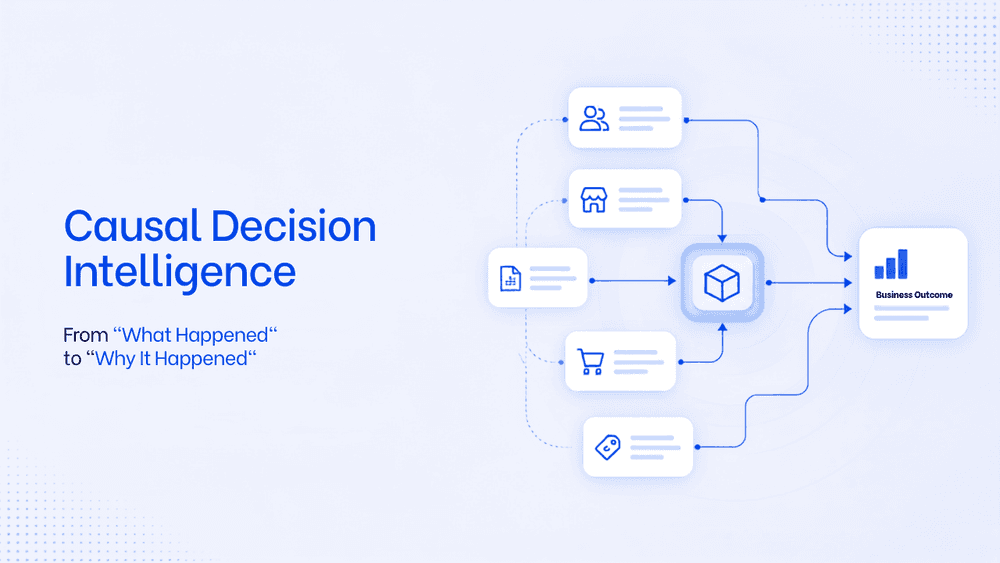
What Is Causal Decision Intelligence? | FireAI
Learn how causal decision intelligence moves beyond reporting to explain why metrics change, reveal root causes and support faster business decisions.

What is a KPI dashboard and why does every Indian business need one?
Still piecing together your business numbers from WhatsApp messages and old Excel files? Here is why a KPI dashboard changes everything for Indian businesses.