

How a Modern Analytics Platform Transforms Business Intelligence
Why faster decision-making, real-time analytics, and AI-driven intelligence separate market leaders from laggards—and how Fire AI closes the gap between data and action.

Monreen Mohanty
Jan 9, 2026 · 6 min read
Why Time to Insight Defines Winners in 2026
Raw data is no longer a competitive advantage. Every organization generates massive volumes of information across marketing, finance, operations, and customer touchpoints. The real differentiator today is how quickly that data turns into decisions.
Leading organizations have shifted their focus from data collection to time to insight. They are not asking who has more dashboards, but who can identify change faster, understand cause and effect, and act before revenue, efficiency, or brand health declines.
Most businesses still operate with fragmented tools, delayed reports, and analyst-dependent workflows. By the time insights surface, the opportunity has already passed.
Fire AI exists to remove that gap. It replaces slow reporting with decision-time intelligence and transforms business analytics from a retrospective function into a live strategic advantage.
1. From Raw Data to Decisions in Minutes, Not Days
The Structural Problem with Traditional Analytics
In most organizations, insights move slower than the business itself. A question emerges. Data must be pulled from multiple systems. Analysts clean, reconcile, and prepare reports. Decision makers finally see the output days or weeks later.
Organizations that make decisions faster consistently outperform peers, yet many still operate on outdated information, reacting after conditions have already changed.
Time to insight has quietly become one of the most important competitive metrics in modern business.
How Fire AI Collapses the Insight Cycle
Fire AI automates the entire analytics chain. Data ingestion, reconciliation, reporting, and visualization happen continuously. Decision makers interact with live dashboards or ask questions in plain English using Ask Fire AI.
Instead of waiting for reports, leaders work directly with real-time intelligence.
Business Impact
- Faster strategic pivots
- Reduced lag between signal and action
- Higher confidence in daily decision making
2. Eliminating Reporting as an Organizational Bottleneck
The Hidden Cost of Manual Reporting
Manual reporting drains organizations quietly but consistently. High-value teams spend hours collecting, validating, and formatting data instead of analyzing it. Errors introduced through spreadsheets compound risk. Leadership decisions rely on inconsistent numbers.
Poor data quality and manual workflows cost organizations millions annually while eroding trust in analytics outputs.
Fire AI Automated Reporting Engine
Fire AI removes reporting as a task entirely.
The platform:
- Pulls data directly from source systems automatically
- Applies data quality checks to prevent inconsistencies
- Generates dashboards and reports without manual intervention
- Distributes insights in real time across stakeholders
Reports no longer delay decisions. They become a byproduct of live data flow.
Business Impact
- Up to 80–90% reduction in reporting effort
- Improved accuracy and consistency
- Teams shift from reporting to interpretation and strategy
3. Advanced Analytics Without IT Dependency
Why Analytics Bottlenecks Form Around IT
Traditional BI systems depend heavily on technical teams. Business users submit requests. IT prioritizes. Backlogs grow. By the time insights arrive, business priorities have changed.
This creates friction, slows decision velocity, and prevents organizations from fully using their data.
Fire AI Self-Service Analytics Model
Fire AI democratizes analytics while maintaining enterprise-grade governance.
Key capabilities include:
- AI-driven data interaction using natural language
- AI-enabled dynamic dashboards customizable for each role
- User access control ensuring secure data visibility
- No dependency on SQL or technical skill sets
Marketing leaders explore performance directly. Finance teams analyze trends without spreadsheets. Executives ask questions and receive instant answers.
Business Impact
- Reduced load on IT and data teams
- Faster decision cycles across departments
- Stronger data-driven culture organization-wide
4. Replacing Monthly Reports with Real-Time Dashboards
Why Monthly Reporting No Longer Works
Monthly reports describe the past. Modern businesses need visibility into what is happening now.
Delayed insight leads to missed opportunities, slow response to performance drops, and reactive leadership.
Fire AI Real-Time Intelligence Layer
Fire AI delivers:
- Live KPI dashboards across marketing, finance, operations, and leadership
- Drill-down views to identify drivers behind performance changes
- Alerts and notifications for anomalies and benchmark breaches
- Mobile-ready dashboards for decision making anywhere
Data becomes a living asset, not a static document.
Business Impact
- Faster response to market shifts
- Proactive operational control
- Improved alignment between teams and leadership
5. AI-Driven Forecasting and Causal Intelligence
The Limits of Traditional Forecasting
Spreadsheets and static models cannot account for real-world complexity. Market volatility, campaign performance, operational constraints, and customer behavior interact in ways manual models cannot capture.
This leads to inaccurate forecasts and inefficient resource allocation.
Fire AI Predictive and Causal Analytics
Fire AI applies machine-learning analytics to:
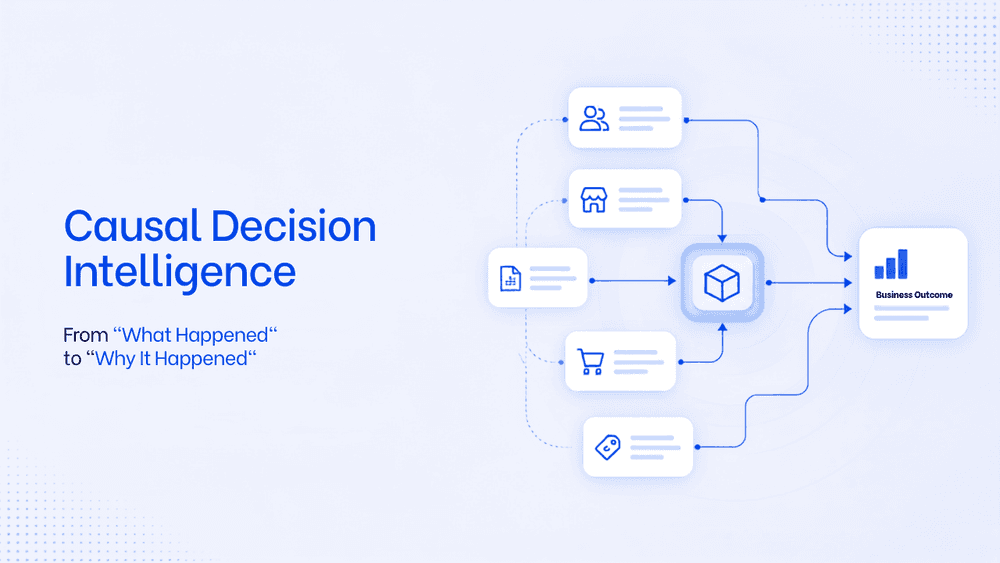
- Identify causal chains behind performance changes
- Detect anomalies early before impact escalates
- Generate rolling forecasts that update continuously
- Support scenario planning with confidence indicators
Instead of guessing outcomes, leaders understand why metrics move and what is likely to happen next.
Business Impact
- Improved forecast accuracy
- Faster budget cycles
- Better capital and resource allocation decisions
The Compound Advantage of Fire AI
Each capability delivers value independently. Together, they redefine how organizations operate.
Fire AI enables:
- Decision making at business speed
- A single source of truth across teams
- Reduced dependency on manual processes
- Intelligence that moves as fast as the market
Data-driven organizations already outperform peers in profitability and productivity. Organizations that reduce insight latency gain an even greater edge.
Fire AI brings these advantages into one unified, AI-enabled analytics platform.
What Leaders Should Do Next
If your organization still relies on manual reporting, fragmented dashboards, analyst-dependent workflows, or lagging monthly insights, the gap between your data and your decisions is costing you growth.
Fire AI closes that gap by transforming analytics into real-time, actionable intelligence designed for leadership, not just analysts.
Frequently Asked Questions
How does Fire AI prove ROI for businesses?
Fire AI reduces reporting effort, improves decision speed, and detects issues earlier. ROI is typically realized through time saved, improved performance visibility, and better allocation of budgets and resources.
How accurate and reliable is Fire AI data?
Fire AI pulls data directly from source systems and applies automated validation, reducing manual errors and improving consistency across reports and dashboards.
Can Fire AI handle attribution across multiple channels?
Yes. Fire AI unifies data across platforms and applies causal analysis to understand what truly drives performance rather than relying on surface-level metrics.
How secure is Fire AI for enterprise use?
Fire AI provides enterprise-grade security with role-based access control, ensuring users only see data they are authorized to access.
How fast will we see value after implementation?
Most teams begin seeing usable dashboards and insights within days since Fire AI automates ingestion and reporting from day one.
Do we need a dedicated data team to use Fire AI?
No. Fire AI is designed for business users. Teams can interact with data using natural language and dynamic dashboards without technical expertise.
Keep reading
More from the blog
See FireAI on your data.
Book a walkthrough to see how FireAI turns your business data into AI-driven decisions.