

Quick answer
Agentic analytics uses autonomous AI agents that independently monitor business data, detect anomalies, surface insights, and trigger actions—without waiting for a human to ask. Unlike traditional BI where users pull reports, agentic analytics pushes intelligence proactively. FireAI's agentic features alert Indian business owners to revenue drops, receivable spikes, or margin erosion before they check any dashboard.
Agentic analytics is the shift from analytics you pull to analytics that finds you. Instead of waiting for a business user to run a report or ask a question, autonomous AI agents continuously monitor your data and proactively deliver insights, alerts, and recommendations.
It represents the most advanced stage in the evolution of business intelligence — from static dashboards, to self-service BI, to conversational analytics, and now to fully autonomous agents.
What is an Analytics Agent?
An analytics agent is an AI system that can:
- Perceive — continuously monitor connected data sources for changes, anomalies, and patterns
- Reason — interpret what those changes mean in a business context
- Act — generate a report, send an alert, update a forecast, or trigger a workflow
- Learn — improve its understanding of what's important based on feedback and outcomes
Unlike a dashboard that waits for you to open it, an analytics agent works in the background 24/7 and surfaces only what matters.
Agentic Analytics vs Traditional BI
| Aspect | Traditional BI | Agentic Analytics |
|---|---|---|
| Initiation | Human-initiated (pull) | AI-initiated (push) |
| Monitoring | Periodic, manual | Continuous, automated |
| Anomaly detection | Requires analyst to investigate | Automatic, with root cause |
| Insights | User creates via reports | Agent generates proactively |
| Actions | None — user decides | Can trigger workflows |
| Coverage | Metrics you know to check | Metrics you didn't know to check |
How Agentic Analytics Works
Step 1: Data Access and Monitoring
The agent connects to all your data sources — databases, ERP systems, CRM, finance tools. It establishes a baseline understanding of normal patterns for each key metric.
Step 2: Continuous Anomaly Detection
Using anomaly detection algorithms and statistical baselines, the agent monitors for:
- Unexpected spikes or drops in sales, revenue, or costs
- Metrics crossing defined thresholds
- Trend reversals or pattern breaks
- Correlations between seemingly unrelated metrics
Step 3: Insight Generation
When something significant is detected, the agent doesn't just send an alert — it generates a natural language explanation: "Sales in the North region dropped 22% this week. The decline is concentrated in SKU-104, which is out of stock at 3 distributors."
This combines diagnostic analytics (why it happened) with the communication style of generative BI.
Step 4: Action or Escalation
Depending on configuration, agents can:
- Send alerts to specific team members via email, Slack, or WhatsApp
- Automatically update dashboards or reports
- Trigger reorder workflows for inventory shortfalls
- Schedule follow-up analysis for deeper investigation
Agentic Analytics vs Generative BI vs Conversational Analytics
These three concepts are often confused:
- Conversational analytics: You ask, the system answers (question-driven)
- Generative BI: You ask, the system generates reports, SQL, and summaries (content creation)
- Agentic analytics: The system acts autonomously — monitors, reasons, and delivers without being asked
Think of the progression: conversational analytics = reactive, generative BI = creative, agentic analytics = proactive.
Real-World Examples of Agentic Analytics
Finance: An agent monitors cash flow daily and sends a CFO an alert when accounts receivable exceeds 45 days DSO, with a breakdown of overdue invoices by customer segment.
Sales: An agent detects that a key account's order frequency has dropped over three weeks and alerts the account manager before the customer churns.
Operations: An agent notices that raw material costs are trending upward across five suppliers and automatically generates a procurement analysis recommending renegotiation timing.
Retail: An agent identifies that a product is selling 40% faster in one region than forecast and triggers a stock redistribution recommendation before stockouts occur.
Why Agentic Analytics Matters for India
For Indian businesses, agentic analytics addresses a structural challenge: most companies have rich operational data (often in Tally) but lack dedicated analysts to monitor it continuously.
Agentic systems act as a virtual analyst team — running continuously, never missing anomalies, and delivering insights in plain language. This makes enterprise-grade analytics accessible to Indian SMBs without the cost of a full data science team.
The Future of Agentic Analytics
Leading BI platforms like ThoughtSpot (with its Spotter agents), Zoho (Ask Zia Agent), and FireAI are all actively building agentic capabilities. Gartner predicts that by 2027, over 50% of enterprise analytics queries will be initiated by AI agents rather than humans.
The progression is clear: the future of business intelligence is analytics that works for you, not analytics you work for.
How FireAI Uses Agentic Analytics
FireAI is building agentic analytics capabilities designed for Indian business realities:
Proactive Tally Monitoring: Connect your Tally data and FireAI's agents continuously monitor sales, receivables, inventory, and margins. You don't check dashboards—dashboards check on your business and alert you when something needs attention.
WhatsApp and Email Alerts: When an agent detects something significant—"Your receivables from Client X crossed ₹15 lakh and are 30 days overdue" or "Product Y sales dropped 35% this week vs last week"—it sends a plain-language alert via WhatsApp or email, the channels Indian business owners actually use.
Automated Root Cause Analysis: Agents don't just say "revenue dropped." They explain why: "Revenue dropped ₹8 lakh this month. 65% of the decline is from the West region, concentrated in 2 distributors who haven't placed orders in 3 weeks."
Practical Indian Business Examples:
- A Surat textile merchant's AI agent detected that a key buyer's order frequency dropped from weekly to monthly—alerting the sales team 6 weeks before the account would have churned (₹20 lakh annual account)
- A Chennai electronics distributor's agent flagged that 3 SKUs were trending toward stockout in 5 days based on current sell-through rates—triggering a reorder that prevented ₹6 lakh in lost sales
- A Kolkata FMCG company's agent identified that one delivery route consistently had 2x higher return rates, saving ₹3 lakh/month after investigation and route reassignment
The Virtual Analyst for SMBs: Indian SMBs can't afford a team of analysts monitoring dashboards 24/7. Agentic analytics from FireAI provides that continuous monitoring at a fraction of the cost—a ₹10 Cr business gets enterprise-grade vigilance without enterprise-grade headcount.
Ready to act on your data?
See how teams use FireAI to ask in plain language and get analytics they can trust.
Explore FireAI workflows
Go from this topic into product features and solution paths that match what you read here.
Topic hub
AI Analytics
Guides on natural language querying, AI-powered analytics, forecasting, anomaly detection, and automated insights.
Explore hubFrequently asked questions
How is agentic analytics different from traditional dashboards and alerts?
Traditional dashboards wait for you to check them, and basic alerts only trigger on simple thresholds ("revenue below ₹10 lakh"). Agentic analytics is fundamentally different—AI agents continuously monitor data, detect complex anomalies, explain WHY something happened, and can trigger actions. It shifts from "pull" analytics to "push" intelligence.
Can Indian SMBs use agentic analytics without a data science team?
Yes. FireAI's agentic features are designed for non-technical users. Connect your Tally data, and AI agents start monitoring sales, receivables, inventory, and margins automatically. Alerts arrive via WhatsApp or email in plain language—no dashboards to configure, no statistical knowledge needed. It's like having a virtual analyst team working 24/7.
What real-world problems can agentic analytics catch that traditional BI misses?
Agentic analytics catches problems humans don't think to look for: a key customer's order frequency silently declining (₹20 lakh account at risk), a product approaching stockout in 5 days (₹6 lakh in potential lost sales), or a delivery route with 2x higher returns (₹3 lakh/month waste). It monitors everything continuously, not just what you build dashboards for.
How does agentic analytics relate to generative BI and augmented analytics?
Think of the progression: augmented analytics automates insight discovery, generative BI creates reports and summaries on demand when you ask, and agentic analytics operates autonomously without being asked. Conversational = you ask, system answers. Generative = you ask, system creates. Agentic = system monitors, reasons, and acts independently.
What types of alerts and actions can agentic analytics agents trigger?
Agents can send WhatsApp/email alerts with natural language explanations, auto-generate investigation reports, flag accounts at churn risk, trigger inventory reorder recommendations, escalate financial anomalies to specific team members, and schedule follow-up analysis. Each alert includes context—not just "metric changed" but "why it changed and what to do about it."
Related in this topic
What is Generative BI? AI-Powered BI Explained
Generative BI uses large language models (LLMs) to automatically generate reports, insights, visualizations, and natural language summaries from business data. Learn what generative BI is, how it works, and how it differs from traditional BI tools.
What is AI-Powered Business Intelligence?
AI-powered business intelligence integrates AI and machine learning with traditional BI to automate insights, enable natural language queries, and provide predictive analytics. Learn how AI BI works, which features matter, and how businesses use it.
What is Augmented Analytics? Definition and Benefits
Augmented analytics uses AI and machine learning to automate data preparation, insight discovery, and natural language generation. Learn how augmented analytics works, which benefits it provides, and see real examples of automated insights.
What is Automated Analytics? Definition and Benefits
Automated analytics uses AI and machine learning to automatically generate insights, detect anomalies, and deliver reports without manual intervention. Learn how automated analytics works and how it reduces the reporting burden on business teams.
From the blog
Democratizing Data: How AI Analytics Levels the Playing Field for Small Businesses and Freelancers
For decades, data-driven decision making was a luxury that only enterprises could afford. Big companies hired data scientists, purchased expensive BI tools, and built complex data warehouses. In exchange, they received precise insights that guided budgets, strategy, and growth.
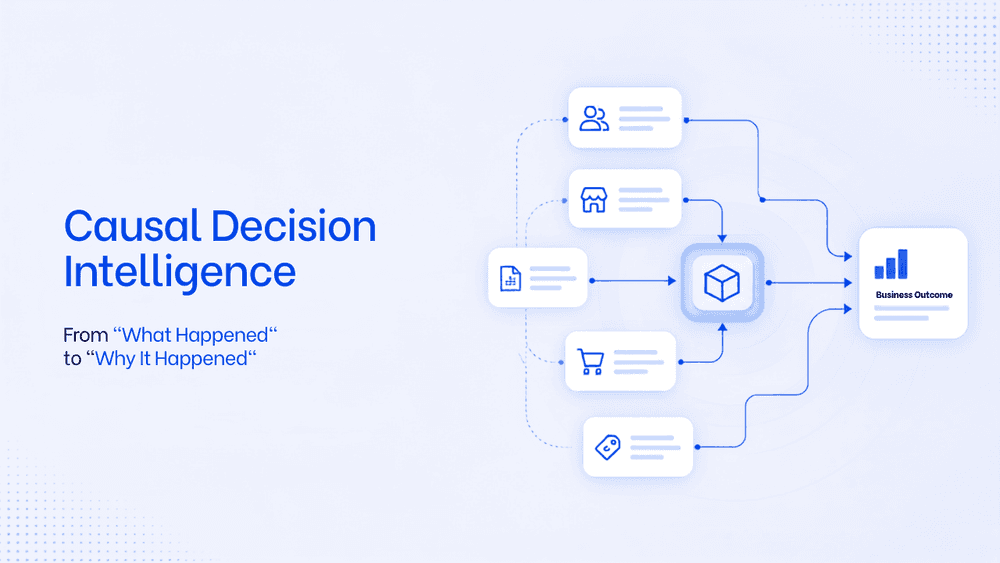
What Is Causal Decision Intelligence? A Framework To Move From "What Happened" to "Why It Happened"
Business intelligence tools are limited in their capability to find the root cause and the trigger behind it. Causal decision intelligence is the AI layer that helps business take faster, smarter decision with an auditable explanation. This will transform the way business analyse data and strategise on teh next actionable steps.

How a Modern Analytics Platform Transforms Business Intelligence
Why faster decision-making, real-time analytics, and AI-driven intelligence separate market leaders from laggards—and how Fire AI closes the gap between data and action.