What is Data Analytics? Definition, Types, and Business Applications
Quick Answer
Data analytics is the process of examining, transforming, and modelling raw data to discover useful information, draw conclusions, and support better business decisions. It encompasses four types: descriptive (what happened), diagnostic (why it happened), predictive (what will happen), and prescriptive (what should we do).
Data analytics is the science of turning raw data into actionable business insights. Every time a business answers a question like "Which products are selling most?", "Why did revenue drop last month?", or "Which customers are most likely to churn?", it is practising data analytics.
What is Data Analytics?
Data analytics involves collecting, processing, and analysing data to identify patterns, trends, correlations, and anomalies that inform business decisions. It ranges from basic spreadsheet analysis to sophisticated AI-powered systems that automatically surface insights.
The goal is the same regardless of sophistication: understand what your data is telling you, and use that understanding to make better decisions.
The 4 Types of Data Analytics
1. Descriptive Analytics — What Happened?
Descriptive analytics summarises historical data to explain past performance. It answers questions like "What were our sales last quarter?" or "How many new customers did we acquire this year?"
Examples: Monthly sales reports, website traffic summaries, inventory snapshots.
This is the foundation of business intelligence — the "what happened" layer every business starts with.
2. Diagnostic Analytics — Why Did It Happen?
Diagnostic analytics goes deeper to explain the causes behind the numbers. It answers "Why did revenue drop 15% last month?" or "What caused the spike in customer complaints?"
Examples: Root cause analysis, correlation studies, drill-down investigations.
3. Predictive Analytics — What Will Happen?
Predictive analytics uses statistical models and machine learning to forecast future outcomes. It answers "What will our sales be next quarter?" or "Which customers are likely to churn?"
Examples: Sales forecasting, demand planning, churn prediction models.
4. Prescriptive Analytics — What Should We Do?
Prescriptive analytics recommends specific actions based on data. It answers "What price should we set?" or "Which marketing campaign will deliver the highest ROI?"
Examples: Pricing optimisation, inventory reorder recommendations, resource allocation algorithms.
Data Analytics vs Business Intelligence vs Data Science
These terms overlap but have distinct meanings:
| Term | Focus | Output | Who Uses It |
|---|---|---|---|
| Data Analytics | Analysing data for decisions | Insights and recommendations | Business users + analysts |
| Business Intelligence | Reporting and dashboards from structured data | Reports, dashboards, KPIs | Business users, executives |
| Data Science | Building predictive models from complex data | ML models, algorithms | Data scientists |
Data analytics is the broadest term — BI is a subset focused on reporting, data science is a subset focused on modelling.
Data Analytics Process
- Define the business question — What decision does this analysis need to support?
- Collect the data — From databases, ERP systems, CRM, spreadsheets, or APIs
- Clean the data — Remove errors, duplicates, and inconsistencies (data cleaning)
- Analyse the data — Apply the appropriate analytical method
- Visualise the results — Create data visualizations that make findings clear
- Communicate and act — Share insights with decision-makers and recommend action
Data Analytics for Indian Businesses
Indian businesses across every sector use data analytics to:
- Finance & accounting — Track P&L, manage cash flow, analyse receivables from Tally
- Sales — Monitor pipeline, forecast revenue, identify top-performing channels
- Inventory — Optimise stock levels, reduce dead stock, predict reorder points
- Manufacturing — Track production efficiency, reduce downtime, manage supplier performance
- Retail — Analyse store performance, identify top SKUs, optimise pricing
The biggest shift in the last three years is the democratisation of data analytics through AI. Platforms with natural language querying allow any employee — not just analysts — to ask questions and get immediate answers from business data. This is self-service analytics made practical.
Getting Started with Data Analytics
For Indian SMBs, the fastest path to data analytics is:
- Start with the data you already have (Tally, Excel, sales system)
- Use a BI tool with a low learning curve that doesn't require SQL or coding
- Focus on 3–5 key metrics that directly affect business performance
- Build a habit of weekly data review before expanding scope
Modern analytics platforms like FireAI make it possible to go from raw Tally data to meaningful dashboards in hours — no data team required.
Explore FireAI Workflows
Jump from the concept on this page into the product features and solution paths most relevant to it.
BI Fundamentals
Foundational guides on business intelligence, analytics architecture, self-service BI, and core data concepts.
Ready to Transform Your Business Data?
Experience the power of AI-powered business intelligence. Ask questions, get insights, make better decisions.
Frequently Asked Questions
Data analytics is the process of looking at data to find patterns and answers that help you make better business decisions. Like a doctor who reads your test results to diagnose a problem, a business uses data analytics to understand what is happening and why.
The four types are: descriptive analytics (what happened), diagnostic analytics (why it happened), predictive analytics (what will happen), and prescriptive analytics (what should we do). Most businesses start with descriptive analytics and progressively add more advanced types.
Business intelligence (BI) is a subset of data analytics focused on structured reporting, dashboards, and KPI tracking. Data analytics is broader and includes predictive modelling, statistical analysis, and data science. BI is what most business users interact with; data analytics encompasses the full analytical spectrum.
Indian businesses use data analytics to track sales and revenue, monitor inventory levels, analyse financial performance from Tally, forecast demand, identify top customers and products, and make faster pricing and procurement decisions. AI-powered tools now make this accessible without a dedicated data team.
Modern data analytics tools no longer require technical skills. Platforms with natural language querying and AI-powered insights allow business owners and managers to ask questions in plain language and get immediate answers — no SQL or coding needed.
Related Questions In This Topic
What is Business Intelligence? Definition, Tools, and Benefits
Business intelligence (BI) combines data analysis, visualization, and reporting to transform raw data into actionable insights. Learn how BI systems work, which tools to use, and how they enable data-driven decision-making.
What is Descriptive Analytics? Examples, Techniques, and Use Cases
Descriptive analytics summarizes historical data to answer "what happened?" Learn how descriptive analytics works, which techniques it uses, and how it provides the foundation for diagnostic, predictive, and prescriptive analytics.
What is Predictive Analytics? Methods, Examples, and Business Applications
Predictive analytics uses statistical algorithms and machine learning to forecast future outcomes based on historical data. Learn how predictive modeling works, which methods are used, and how businesses apply it for sales forecasting, risk management, and strategic planning.
What is AI-Powered Business Intelligence? Features, Benefits, and Use Cases
AI-powered business intelligence integrates AI and machine learning with traditional BI to automate insights, enable natural language queries, and provide predictive analytics. Learn how AI BI works, which features matter, and how businesses use it.
Related Guides From Our Blog
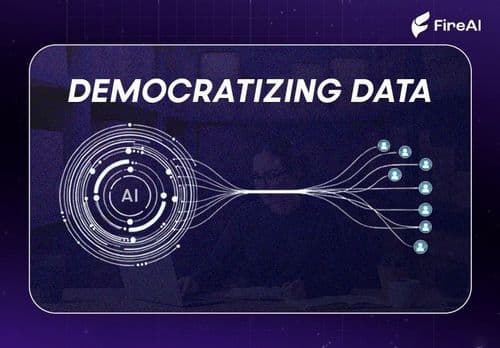
Democratizing Data: How AI Analytics Levels the Playing Field for Small Businesses and Freelancers
For decades, data-driven decision making was a luxury that only enterprises could afford. Big companies hired data scientists, purchased expensive BI tools, and built complex data warehouses. In exchange, they received precise insights that guided budgets, strategy, and growth.

How a Modern Analytics Platform Transforms Business Intelligence
Why faster decision-making, real-time analytics, and AI-driven intelligence separate market leaders from laggards—and how Fire AI closes the gap between data and action.
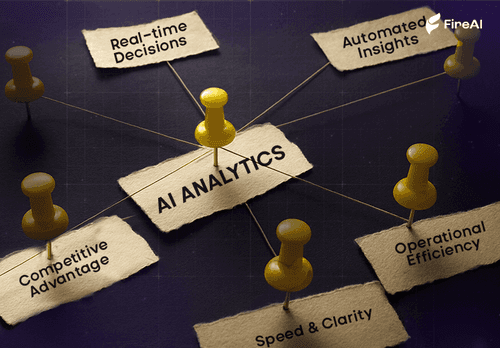
Why AI Analytics Is Now Mission Critical for Every Modern Business
Data is no longer a competitive advantage on its own. Every company collects it. Only a few convert it into decisions, action, and revenue.