

Quick answer
A Natural Language Query (NLQ) is a method of asking questions about data using everyday conversational language instead of technical programming languages like SQL. NLQ systems use artificial intelligence and natural language processing to understand plain-language questions, translate them into database queries, and return answers in user-friendly formats—enabling anyone to analyze data without coding skills.
A Natural Language Query (NLQ) transforms how people interact with data by eliminating technical barriers and making analytics accessible to everyone. Instead of learning complex SQL syntax or database structures, users simply ask questions in their own words—and receive instant, accurate insights from their business data.
What is Natural Language Query (NLQ)?
A Natural Language Query (NLQ) is a capability that allows users to query databases and analytics systems using ordinary human language—through text or voice—instead of structured programming languages like SQL. NLQ leverages artificial intelligence, natural language processing (NLP), and machine learning to interpret conversational questions, understand user intent, and automatically translate them into executable database queries.
Simple Example:
- Instead of SQL:
SELECT SUM(revenue) FROM sales WHERE region='West' AND month='January' - Ask in plain English: "What was the total revenue in the West region last month?"
The NLQ system handles the technical translation automatically, making data analysis accessible to anyone without programming expertise. For a dedicated walkthrough of how questions become executable SQL, see NLQ to SQL.
Why NLQ Matters
Traditional data analysis created barriers that NLQ eliminates:
- Technical Complexity: SQL requires extensive training; NLQ works immediately
- Knowledge Barriers: No need to understand database schemas or table relationships
- Time Delays: Eliminates dependency on data analysts for routine questions
- Error-Prone: AI-generated queries avoid syntax errors and logical mistakes
How Does Natural Language Query Work?
Natural Language Query systems process conversational questions through four key steps:
Step 1: Query Understanding
The AI analyzes your question to detect:
- Intent: What you want to accomplish (retrieve, compare, analyze trends)
- Entities: Key terms like metrics ("revenue"), dimensions ("region"), time periods ("last month")
- Context: References to previous questions in the conversation
- Ambiguities: Resolves unclear terms using data schema knowledge
Step 2: Semantic Mapping
The system connects natural language to your database:
- Schema Mapping: Links mentioned entities to actual tables and columns
- Synonyms: Recognizes "revenue," "sales," and "income" as the same field
- Relationships: Understands how data connects (customers → orders → products)
- Business Rules: Applies your organization's calculations and definitions
Step 3: Query Generation
AI creates optimized, executable SQL:
- SQL Construction: Generates correct syntax with SELECT, WHERE, JOIN, GROUP BY
- Optimization: Ensures queries run efficiently on large datasets
- Validation: Checks for errors before execution
- Security: Applies permissions so users only see authorized data
Step 4: Results & Presentation
Delivers user-friendly output:
- Formatting: Presents results as tables, charts, or graphs based on data type
- Natural Language Summary: Explains what the data means in plain English
- Follow-up Questions: Enables conversational drilling into details
Real-World Examples of Natural Language Queries
Here are practical examples showing how NLQ translates conversational questions into SQL:
Example 1: Basic Retrieval
Ask: "Show me last month's sales"
Generated SQL: Automatically calculates date ranges and sums sales_amount
Benefit: No need to understand date functions or SQL syntax
Example 2: Comparative Analysis
Ask: "Compare revenue between this quarter and last quarter by region"
Generated SQL: Creates conditional aggregations with CASE statements and GROUP BY
Benefit: Complex comparisons in seconds without manual query construction
Example 3: Multi-Table Analysis
Ask: "Which customers purchased more than $10,000 of electronics last year?"
Generated SQL: Joins customers, orders, order_items, and products tables with HAVING clause
Benefit: Multi-table joins happen automatically—no need to understand relationships
Example 4: Trend Analysis
A classic trend analysis prompt in plain language:
Ask: "Show me the sales trend for the past 6 months"
Generated SQL: Groups by month with date truncation
Result: Presents as a line chart, not just a data table
Benefit: Visual insights without manually creating charts
Key Benefits of Natural Language Query
1. Democratized Data Access
- Universal Accessibility: Anyone can query data without SQL knowledge or technical training
- Self-Service Analytics: Eliminates dependency on data analysts for routine questions (learn more about self-service BI)
- Inclusive Participation: More employees participate in data-driven decision-making
2. Dramatically Faster Insights
- Instant Responses: Answers in seconds instead of hours or days
- Iterative Exploration: Ask follow-up questions immediately in natural conversation
- Real-Time Decisions: On-the-spot insights during meetings and customer calls
3. Reduced Learning Curve
- Zero Training: Start asking questions immediately using everyday language
- Intuitive Interface: Conversational interaction feels natural and familiar
- Progressive Learning: Users improve naturally through practice
4. Fewer Errors & Higher Quality
- No Syntax Errors: AI eliminates typos and logical mistakes
- Automatic Optimization: Generates efficient, well-performing queries
- Consistent Logic: Applies organizational definitions automatically
5. Multilingual & Voice Support
- Language Flexibility: Query data in your native language
- Voice Capabilities: Hands-free data access for mobile and operational users
- Accessibility: Makes analytics available to users with disabilities
6. Enhanced Productivity
- 60-80% Time Savings: Organizations drastically reduce time on routine requests
- Analyst Efficiency: Data professionals focus on strategic work
- Faster Decisions: Instant data access accelerates organizational agility
Natural Language Query vs SQL: Key Differences
Understanding when to use NLQ versus SQL helps organizations deploy the right tool for each scenario. See our detailed comparison.
| Aspect | Natural Language Query (NLQ) | SQL |
|---|---|---|
| Accessibility | Anyone can use—no training needed | Requires programming knowledge & training |
| Speed | Instant for exploratory analysis | Faster for repetitive queries once written |
| Precision | Sufficient for most business questions | Absolute control over every detail |
| Best For | Business users, executives, ad-hoc analysis | Data engineers, complex transformations, ETL |
When to Use Each
Use NLQ for:
- Executive dashboards and KPI monitoring
- Sales team queries and customer lookups
- Exploratory data analysis by business users
- Ad-hoc reporting and operational metrics
Use SQL for:
- Complex data transformations and ETL processes
- Advanced analytical models requiring precise control
- Data engineering and pipeline development
- Performance-critical reporting with specific optimizations
Best Practice: Modern platforms combine both—NLQ for business users, SQL for technical users—maximizing accessibility while preserving advanced capabilities.
Natural Language Query in Business Intelligence
NLQ has become essential in modern business intelligence platforms. Learn why NLQ is the future of BI.
Common BI Applications
- KPI Dashboards: Ask questions to understand metric changes and drill into details
- Report Generation: Create custom reports by describing needs in plain language
- Anomaly Investigation: Instantly ask follow-up questions when alerts trigger
- Trend Analysis: Get forecasts and comparisons without building complex models
- Customer Analytics: Query customer data during sales calls and support interactions
Industry Examples
- Retail: "Which products had the biggest sales increase last week?"
- Healthcare: "Show me patient readmission rates by diagnosis"
- Finance: "Compare quarterly expenses across departments"
- Manufacturing: "What's the defect rate trend for Product X?"
- E-commerce: "Who are our top customers this month?"
Technologies Behind NLQ Systems
NLQ systems combine multiple AI technologies. Learn more about NLP powering these systems.
Natural Language Processing (NLP):
- Tokenization, part-of-speech tagging, entity recognition
- Understanding grammatical relationships in questions
Machine Learning Models:
- Intent classification for different question types
- Entity extraction and semantic similarity matching
- Ranking algorithms for ambiguous queries
Large Language Models (LLMs):
- Contextual understanding of nuanced questions
- Few-shot learning for organizational terminology
- Natural language explanations of results
Knowledge Graphs:
- Schema mapping of database relationships
- Business glossaries and metric definitions
- Semantic understanding of business concepts
Implementation Best Practices & Common Challenges
Best Practices for Success
1. Data Quality Foundation
- Use clean, well-structured data with consistent naming
- Provide business-friendly names matching natural language
- Add comprehensive metadata and business definitions
2. Business Context
- Define key metrics clearly ("What is an 'active customer'?")
- Document calculations for consistency
- Map user terminology to database fields
3. Security & Governance
- Implement row-level security respecting permissions
- Log all queries for compliance and monitoring
- Validate queries before execution
4. User Guidance
- Show example questions that work well
- Suggest logical follow-up questions
- Provide helpful error messages, not technical jargon
5. Continuous Improvement
- Track usage patterns and frequently asked questions
- Monitor accuracy and gather user feedback
- Optimize query performance regularly
Common Challenges & Solutions
| Challenge | Solution |
|---|---|
| Ambiguous questions | Ask clarifying questions; use smart defaults; learn user preferences |
| Complex terminology | Create industry-specific training; build knowledge graphs; allow custom synonyms |
| Performance issues | Optimize queries; use data marts; cache frequent questions |
| High expectations | Communicate capabilities clearly; provide examples; offer hybrid NLQ+analyst approach |
| Data quality problems | Implement quality initiatives; profile data; show quality warnings |
The Future of Natural Language Query
NLQ technology continues evolving with exciting trends:
- Enhanced Conversations: Multi-turn dialogs with context awareness; proactive AI suggestions
- Multimodal Interfaces: Voice-first analytics; AR/VR spatial data exploration; visual + language query building
- Advanced AI: Causal analysis explaining "why"; predictive "what if" scenarios; autonomous insight discovery
- Specialized Solutions: Industry-specific NLQ (healthcare, finance, retail); role-based customization; automated compliance
Popular NLQ Platforms
Enterprise BI Tools: ThoughtSpot, Tableau Ask Data, Power BI Q&A, Qlik Insight Advisor
Specialized Solutions:
- FireAI: Conversational analytics with multilingual support (Hindi, Tamil, Telugu), voice input, and mobile-optimized interfaces for Indian businesses
- Sisense Fusion, Looker
Database-Native: Snowflake Cortex, Google BigQuery, Amazon Athena
Getting Started with NLQ
Step 1: Assess Readiness
- Evaluate data quality and documentation
- Identify high-value use cases
- Determine which teams benefit most
Step 2: Choose Platform
- Define requirements (language, security, integrations)
- Test with your actual data and questions
- Ensure compatibility with existing tools
Step 3: Pilot Implementation
- Start small with one department
- Provide guidance on question formulation
- Gather user feedback
Step 4: Scale & Optimize
- Expand based on pilot success
- Monitor usage and accuracy
- Introduce advanced features gradually
Conclusion
Natural Language Query transforms data interaction by making sophisticated analytics accessible to everyone, regardless of technical background. By eliminating SQL syntax barriers, NLQ democratizes business intelligence and enables faster, more inclusive decision-making.
As AI advances, NLQ will become increasingly sophisticated and intuitive. Organizations adopting NLQ today position themselves to leverage data more effectively and empower broader participation in analytics.
Whether you're an executive seeking strategic answers, a sales professional analyzing customer data, or an operations manager monitoring performance, NLQ transforms complex data analysis into simple conversation.
FireAI delivers enterprise-grade NLQ capabilities with multilingual support (Hindi, Tamil, Telugu), voice input, and mobile-optimized interfaces—making advanced analytics accessible across your entire organization.
Ready to act on your data?
See how teams use FireAI to ask in plain language and get analytics they can trust.
Explore FireAI workflows
Go from this topic into product features and solution paths that match what you read here.
Topic hub
AI Analytics
Guides on natural language querying, AI-powered analytics, forecasting, anomaly detection, and automated insights.
Explore hubFrequently asked questions
What is a natural language query?
A natural language query (NLQ) is a method of asking questions about data using everyday conversational language instead of technical programming languages like SQL. NLQ systems use AI to understand plain-language questions, translate them into database queries, and return answers in user-friendly formats.
How does natural language query work?
Natural language query works through four steps: (1) Understanding the user's question using AI to detect intent and extract entities, (2) Mapping natural language to database structures, (3) Generating executable SQL queries automatically, and (4) Executing queries and presenting results in user-friendly formats like tables, charts, or natural language summaries.
What is the difference between NLQ and SQL?
NLQ uses conversational language accessible to anyone, while SQL requires technical programming knowledge. NLQ is faster for exploratory analysis and routine questions, while SQL offers precise control for complex analytical logic. Modern platforms often provide both, with NLQ for business users and SQL for technical users.
What are examples of natural language queries?
Examples include: "Show me last month's sales", "Which customers purchased more than $10,000 last year?", "Compare revenue between this quarter and last quarter", and "What's the sales trend for the past 6 months". These conversational questions are automatically translated into SQL and executed.
Do I need to know SQL to use natural language query?
No, natural language query is specifically designed for users who don't know SQL. You simply ask questions in plain English (or other supported languages), and the AI automatically converts them into SQL queries behind the scenes. No programming knowledge or technical training is required.
What are the benefits of natural language query?
Key benefits include democratized data access for non-technical users, dramatically faster insights (seconds instead of hours/days), reduced learning curve with no training required, fewer errors from AI-generated queries, multilingual and voice support, and enhanced productivity across organizations.
Is natural language query accurate?
Modern NLQ systems achieve high accuracy for typical business questions, especially when implemented with quality data and proper metadata. Accuracy improves over time through machine learning and user feedback. For highly complex or ambiguous questions, systems may ask clarifying questions to ensure correct interpretation.
Can natural language query handle complex questions?
Yes, advanced NLQ systems can handle complex queries including multi-table joins, aggregations, comparisons, trend analysis, and filtering. However, extremely complex analytical logic requiring custom programming may still require SQL or analyst support. NLQ handles 80-90% of typical business questions effectively.
What industries use natural language query?
NLQ is used across industries including retail (sales analysis), healthcare (patient analytics), finance (financial reporting), manufacturing (quality monitoring), e-commerce (customer insights), logistics (operational metrics), and professional services (project analytics). Any industry with data-driven decision-making benefits from NLQ.
How secure is natural language query?
NLQ security depends on platform implementation. Enterprise NLQ systems include row-level security ensuring users only see authorized data, audit trails logging all queries, query validation preventing destructive operations, and compliance features for regulatory requirements. Choose platforms meeting your security standards.
What is the best natural language query tool?
Leading NLQ platforms include ThoughtSpot, Tableau Ask Data, Power BI Q&A, and specialized solutions like FireAI which offers multilingual support (including Hindi, Tamil, Telugu), voice input, and mobile-optimized interfaces. The best tool depends on your specific needs, data sources, language requirements, and user base.
Can natural language query work with voice input?
Yes, many modern NLQ platforms support voice input, allowing hands-free data queries. This is particularly valuable for mobile users, operational environments, and accessibility. Platforms like FireAI offer voice-enabled analytics in multiple languages, enabling users to ask questions through speech.
Related in this topic
Natural Language BI: Ask Questions, Get Charts
Discover how natural language BI lets anyone ask data questions in plain English and get instant charts and answers. No SQL, no dashboard building required.
Why Is Natural Language Querying the Future of BI?
Discover why natural language querying represents the future of business intelligence. Learn about conversational analytics, accessibility advantages, and how NLQ transforms data analysis for all users regardless of technical expertise.
Natural Language Queries vs SQL: Which Is Better?
Compare natural language queries vs SQL queries for business intelligence access. Learn about ease of use, precision, learning curves, and when to use conversational AI vs structured database queries.
What is Conversational Analytics? Chat with Your Data
Conversational analytics lets you query data in plain English—no SQL. Ask FireAI is a leading example: chat-style answers and charts from your connected data.
From the blog

How a Modern Analytics Platform Transforms Business Intelligence
Why faster decision-making, real-time analytics, and AI-driven intelligence separate market leaders from laggards—and how Fire AI closes the gap between data and action.
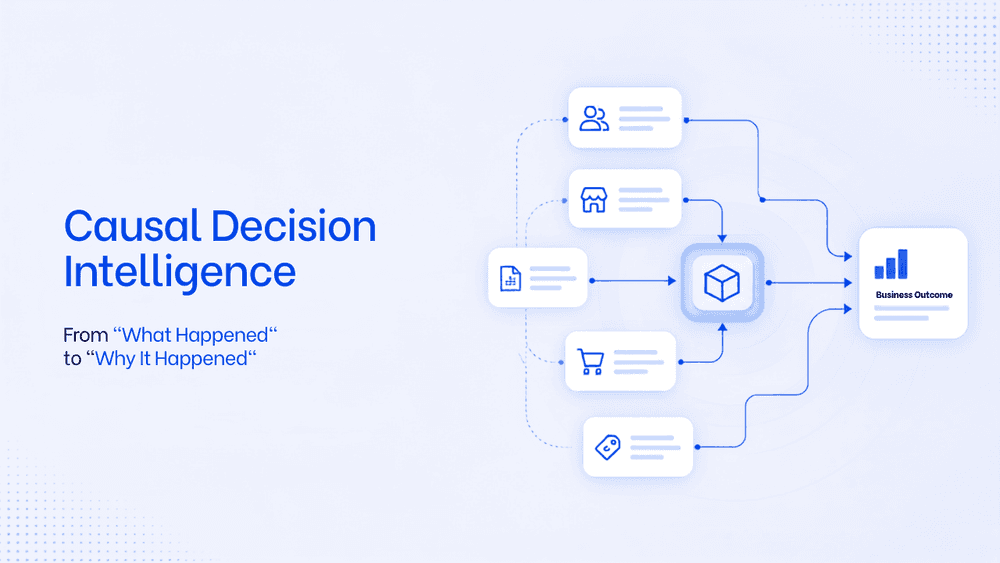
What Is Causal Decision Intelligence? A Framework To Move From "What Happened" to "Why It Happened"
Business intelligence tools are limited in their capability to find the root cause and the trigger behind it. Causal decision intelligence is the AI layer that helps business take faster, smarter decision with an auditable explanation. This will transform the way business analyse data and strategise on teh next actionable steps.
What Is a Data Silo and Why Is It Slowing Down Your Business?
Data silos are silently costing Indian businesses time, money and decisions. Here is what they are, why they form and how to break them for good with FireAI.