

Quick answer
The best BI tools for food and beverage operators in India include FireAI, Power BI, Tableau, Zoho Analytics, Qlik Sense, and POS-first suites such as Posist or Petpooja. Prioritise menu engineering, food cost percentage, recipe variance, and same-store or franchise benchmarking before you standardise a platform.
The best BI tools for food and beverage businesses in India connect kitchen economics (recipes, waste, theoretical vs actual food cost) with outlet performance (sales, labour, aggregators) so operators can see which menus, stores, and channels actually make money. Generic BI can chart revenue, but F&B teams need item-level margin, outlet roll-ups, and delivery-platform fees in one layer.
This comparison covers six practical options for restaurants, cloud kitchens, and chains, with emphasis on menu analytics, food cost, and outlet benchmarking. For how FireAI fits your stack, see the F&B and restaurant solution and food and beverage finance use cases.
Quick picks
- FireAI — Fastest path to natural-language dashboards, recipe and food cost views, and multi-outlet benchmarks when data spans POS, spreadsheets, and accounting.
- Power BI — Strong when you already run Microsoft, have a data modeler, and can land clean POS or ERP exports in a warehouse.
- Tableau — Best for deep visual analysis and leadership storytelling when budget and analyst time are available.
- Zoho Analytics — Sensible if books, inventory, or CRM already live in Zoho and you want quick connectors without a big project.
- Qlik Sense — Associative exploration across large outlet and SKU histories for teams that live in ad hoc analysis.
- POS-native analytics (e.g. Posist, Petpooja) — Good default when a single POS is the system of record and you mainly need operational tiles, not cross-system finance truth.
Comparison: menu analytics, food cost, and outlet benchmarking
| Tool | Menu engineering and item analytics | Food cost and recipe economics | Outlet / franchise benchmarking | Notes for India |
|---|---|---|---|---|
| FireAI | Stars/plowhorses/puzzles-style views, item velocity, mix impact | Theoretical vs actual food cost, variance flags, ingredient drift | Same-store trends, outlet ranking, region or format cuts | Regional language questions, quick rollout, works across POS + Tally |
| Power BI | Strong when item-level facts are modeled in a warehouse | Possible with recipe tables and purchase data joined cleanly | Franchise boards if outlet master and KPIs are standardized | Often needs Azure and BI skills; aggregator fee logic is usually custom |
| Tableau | Excellent visuals for menu and daypart analysis | Good for analyst-built food cost models with solid prep | Leadership-friendly outlet comparisons | Higher cost; India-specific tax or payout logic is bespoke |
| Zoho Analytics | Works if menu and sales sync from Zoho Books or imports | Moderate; depends on how purchases and recipes are captured | Outlet widgets when hierarchy is maintained in Zoho or sheets | Fits Zoho-first SMBs; weak for messy multi-POS estates |
| Qlik Sense | Deep drill across menu, outlet, and campaign dimensions | Powerful when purchase, recipe, and sales grain align | Strong for operators comparing many outlets over long history | Similar implementation effort to other enterprise BI |
| POS-native BI | Often built-in category and item reports | Varies; some suites offer recipe and inventory modules | Usually strong inside one POS, weaker across brands or legacy systems | Fast for single-vendor estates; breaks when you add a second POS or central kitchen ERP |
Menu engineering analytics classifies items by popularity and margin so you fix prices, portions, or placement. Food cost percentage ties recipe cost to sales and highlights waste, pilferage, or supplier drift. Outlet benchmarking compares revenue, margin, labour, and aggregator dependency across locations or franchisees so underperformers are visible early.
What strong F&B BI includes
Menu and product analytics
- Contribution margin by item, category, and daypart
- Attach rate, combo performance, and LTO (limited time offer) lift
- Engineering matrix views (stars, plowhorses, puzzles, dogs) from live POS mix
For a deeper definition, see what is menu engineering analytics.
Food cost and inventory
- Recipe cost cards with updated ingredient prices
- Theoretical usage vs actual depletion; variance by outlet or shift
- Central kitchen allocation and inter-outlet transfers where applicable
Outlet and franchise performance
- Same-store sales and year-over-year trends
- Labour as percent of sales, sales per labour hour
- Delivery aggregator fees, net revenue after commissions, and platform mix
Finance teams often reconcile these views with Tally or similar for GST-aligned purchases and payouts. That is why FireAI emphasises operational metrics and accounting-friendly rollups in one analytics layer.
India-specific considerations
- GST on food service — Purchases, compositions, and credit flows should align with how you report food cost and outlet P&L.
- Aggregator economics — Zomato, Swiggy, and quick-commerce fees change net margin by item; dashboards should show net, not only gross ticket.
- Franchise and multi-brand groups — Royalty, marketing funds, and central kitchen charges need clear allocation rules for fair outlet benchmarking.
For a broader market overview, see best BI tools in India.
Next steps
Start with three tiles every F&B leadership team should agree on: food cost percentage, contribution margin by top items, and outlet rank on net sales after commissions. Then add labour and waste. Teams that need answers in plain language across POS and finance can evaluate FireAI alongside one incumbent BI on a pilot region or format (dine-in vs delivery).
Ready to act on your data?
See how teams use FireAI to ask in plain language and get analytics they can trust.
Explore FireAI workflows
Go from this topic into product features and solution paths that match what you read here.
Topic hub
Industry Analytics In India
Comparison pages and implementation guidance for industry-specific BI, dashboards, and analytics use cases in India.
Explore hubFrequently asked questions
What should restaurants and F&B chains in India prioritise when choosing a BI tool?
Prioritise menu-level margin and engineering views, food cost percentage with theoretical vs actual variance, multi-outlet or franchise benchmarking, and clear net revenue after delivery platform commissions. Without item-level economics and outlet comparison, dashboards often show turnover while loss-making menus or stores stay hidden.
How is food cost analytics different from inventory reporting?
Inventory reporting tracks stock on hand and movement. Food cost analytics links recipes, ingredient prices, and sales mix to compute expected cost, compares it to actual usage and purchases, and surfaces variance that points to waste, theft, or supplier price drift.
Can FireAI work with our POS and Tally together for F&B?
Yes. FireAI is built for cases where outlet operations (POS, sheets, aggregator exports) must meet finance truth in Tally or similar. You can ask questions in everyday language, build menu and outlet dashboards, and keep purchase and tax-aligned views consistent for leadership and finance.
Are Power BI or Tableau enough for restaurant analytics in India?
They can work if you have reliable data pipelines, recipe and purchase data at the right grain, and skilled people to model aggregator fees and franchises. Many mid-market F&B groups choose an AI-first platform like FireAI when they want faster rollout, regional language queries, and outlet plus food cost views without a large BI project team.
Related in this topic
What Is Menu Engineering Analytics for Restaurants?
Menu engineering analytics classifies menu items by popularity and profit using the BCG matrix (stars, plowhorses, puzzles, dogs). Learn how Indian restaurants and QSRs optimize menus, and how FireAI auto-classifies items from POS data.
Best BI Tools for Hospitality in India (2026)
Compare the best business intelligence tools for Indian hospitality — hotels, restaurant chains, resorts, and food service companies. Find BI platforms built for RevPAR, occupancy tracking, and F&B analytics.
What Is Inventory Analytics? Why It Matters for Indian Businesses
Inventory analytics measures stock health, turnover, and risk using your operational data. Learn what it includes (dead stock, safety stock, expiry), why it matters for working capital, and how FireAI builds inventory dashboards from Tally.
7 Best BI Tools in India (2026)
Compare the best business intelligence tools for Indian businesses in 2026. See pricing features and which BI platform fits SMBs mid-market and enterprise.
From the blog
Multi-Outlet Retail Analytics: Track Store Sales
Track sales, stockouts, and staff performance across all stores. Learn how multi-outlet retail analytics can find the root cause of revenue leaks.
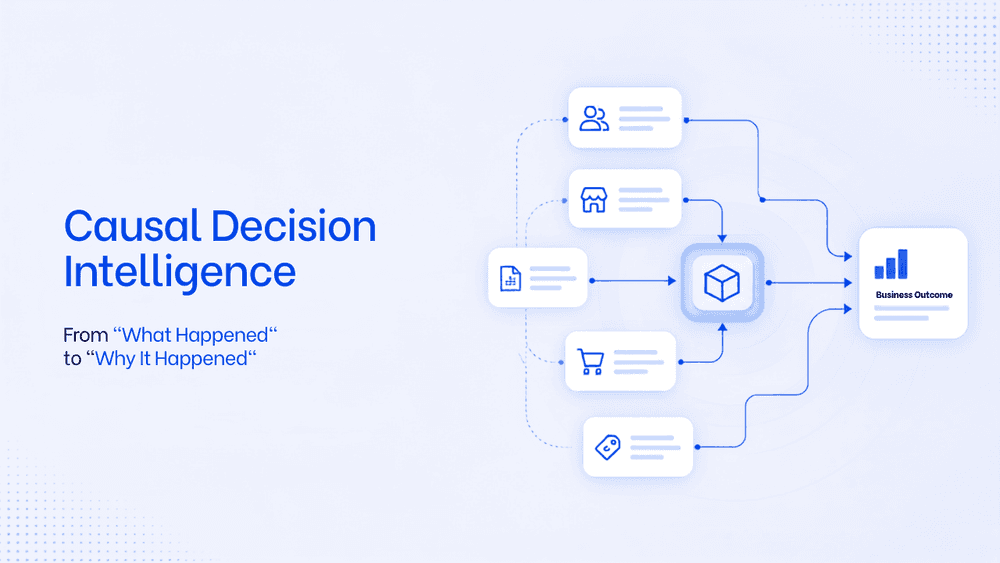
What Is Causal Decision Intelligence? A Framework To Move From "What Happened" to "Why It Happened"
Business intelligence tools are limited in their capability to find the root cause and the trigger behind it. Causal decision intelligence is the AI layer that helps business take faster, smarter decision with an auditable explanation. This will transform the way business analyse data and strategise on teh next actionable steps.

How a Modern Analytics Platform Transforms Business Intelligence
Why faster decision-making, real-time analytics, and AI-driven intelligence separate market leaders from laggards—and how Fire AI closes the gap between data and action.